Image created by the author using CHAT GPT DALL-E, © 2026 by National Housing Conference
Over four decades in politics, you learn a lot of important lessons. One of the most valuable was at the end of the first Gulf War, Operation Desert Storm. Current House and Senate members facing midterm elections ignore it at their own political peril.
On March 6, 1991, President George H.W. Bush addressed a joint session of Congress to declare victory in Iraq and lay out an agenda for the future. He focused on using the political capital we built with our broad international coalition to bring peace and prosperity to the Middle East. “We must foster economic development for the sake of peace and progress. The Persian Gulf and Middle East form a region rich in natural resources with a wealth of untapped human potential…the challenge is to reach higher, to foster economic freedom and prosperity for all the people of the region.”
Nearly 20 minutes into a 30-minute speech, he went on to say, “our first priority is to get this economy rolling again. The fear and uncertainty caused by the Gulf crisis were understandable. But now that the war is over, oil prices are down, interest rates are down, and confidence is rightly coming back. Americans can move forward to lend, spend, and invest in this, the strongest economy on Earth.”
It was late, and I was watching from the dimly lit office of one of his closest political advisors, Janet Mullins Grissom. When the speech ended, she turned to me, shaking her head in disappointment, and said, “we could lose this election.” I was shocked. President Bush’s popularity was 90%.
“You need to get some rest,” I said. “No,” she replied. “This speech needed to be about Domestic Storm, not Desert Storm. Political capital is like milk in the back seat of a hot car. It goes sour very fast.”
Eighteen months later I was working on my resume, and by November 1992, I needed it. The night of the Desert Storm victory speech, the United States was in the midst of a recession with unemployment nearly 7%, and inflation double what it is today. By election, we were limping forward in a “jobless recovery.”
To put President Bush’s 1991 popularity in context, it was nearly 30 points higher than Joe Biden’s peak and 12 points higher than Barack Obama’s – both during the early “honeymoon” period following their inaugurations. The highest rating President Donald Trump has reached to date is more than 40 points lower.
Over the next 18 months, Bush’s popularity cratered. He lost his bid for reelection because it was, “the economy, stupid,” as Bill Clinton’s advisors stressed throughout the campaign. The fact that the economy had already begun to improve meant nothing, because voters did not feel it.
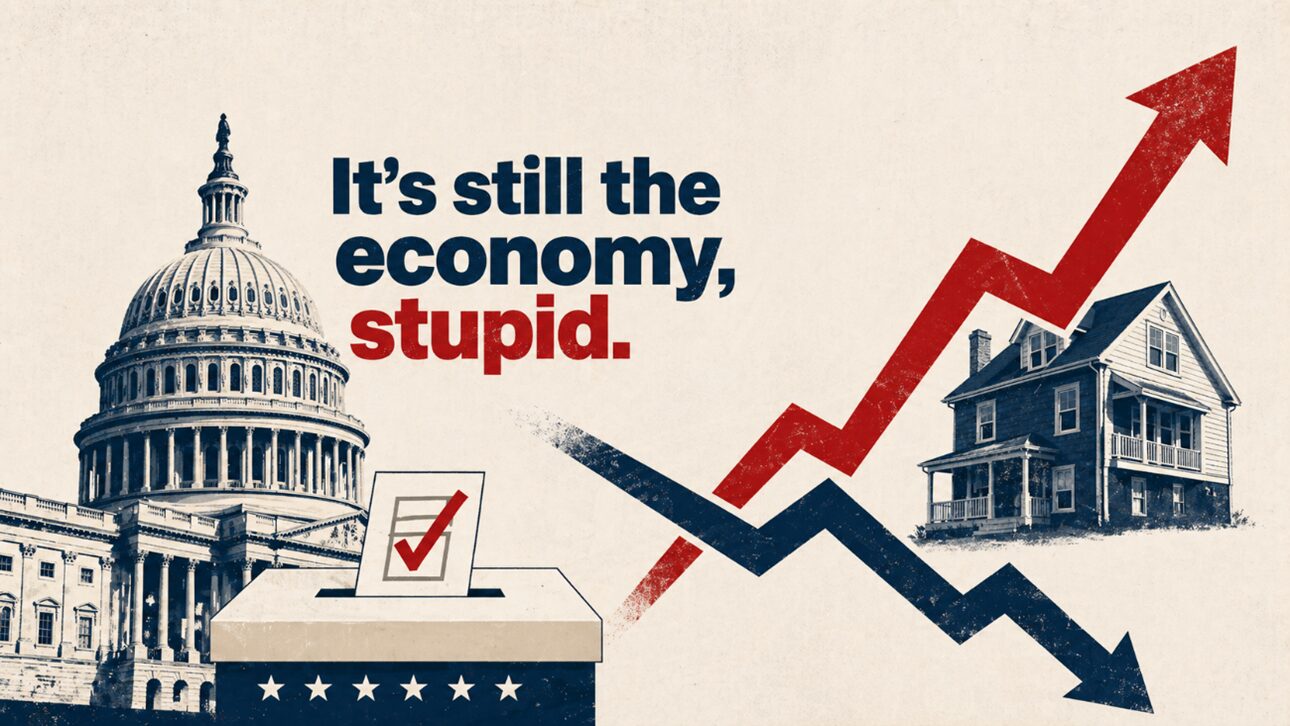
It’s still the economy, stupid.
People don’t feel productivity or employment, I wrote here forty months ago. They feel the price of milk, and meat, and gas, and housing, because it’s the biggest expense of almost any monthly budget. Housing is closely linked with our perception of upward mobility. There’s an additional cruel political twist to inflation. Everyone feels it going up. No one feels it slowing down. And short of an economic catastrophe, they don’t go back down.
Housing remains a major driver of discontent among Americans. It’s no wonder. A registered nurse can no longer afford to buy a home in 217 metro areas – 146 more than in 2019. A middle school teacher can’t afford to buy one in 299 metro areas, up from 114 in 2019. And 7,968 new occupation and metro area pairings can no longer afford to rent a one-bedroom apartment over the same period, according to NHC’s Paycheck to Paycheck database.
Anemic growth of 2 percent in GDP, and stubborn core Consumer Price Index of 2.6% percent are leveraged by skyrocketing gas prices due to the Iran war. Members of Congress running for reelection won’t be helped by votes on legislation that doesn’t become law. Good thing for them they have one that has broad bipartisan support and can easily be sent to the President this summer, when they’ll need it most.
The 21st Century ROAD to Housing Act passed the Senate on March 12 by an overwhelming 89-10 vote, after its House counterpart cleared the chamber by a similarly bipartisan margin of 390-9. To be sent to President Trump for his signature, the two chambers need to reconcile the bills they have passed into one by meeting in a “conference.” This approach is backed by Speaker of the House Mike Johnson (R-La.), House Financial Services Committee Chairman French Hill (R-Ark.) and Ranking Member Maxine Waters (D-Calif.), among others.
There are many common features with broad support, like the Housing Affordability Act, which would increase the statutory maximum loan limits for Federal Housing Administration (FHA) multifamily mortgages; the Housing Supply Expansion Act, which eliminates the permanent chassis requirement for manufactured homes, modernizing regulations that govern new manufactured housing construction; the Community Investment and Prosperity Act, which raises the cap on bank public welfare investments, such as affordable housing and community development projects, from 15 percent to 20 percent; and the HOME Reform Act, which would significantly improve the HOME program. This bill was written by House Financial Services Housing and Insurance Subcommittee Chairman Mike Flood (R-Neb.) and Ranking Member Emanuel Cleaver II (D-Mo.), who we are honoring at our Housing Visionary Awards Gala on June 24 for their bipartisan leadership.
If President Donald Trump and Republicans in Congress don’t do something really tangible, the results will show it, regardless of what the Democrats do. It’s a fundamental law of politics: the economy always wins. Politicians who want to be on the right side of that conflict should make sure housing wins too.
Some might be tempted to wonder why Democrats want any housing bill passed this year. If Republicans fail to pass it, they will benefit, though many other factors will support their narrative that Republicans are bad for the economy. Were they to share any responsibility for that failure, however, they could undercut that advantage, helping Republicans. So, if Republicans push to pass a bipartisan bill, Democrats have to go along. That’s a huge advantage that, so far, Republicans are squandering.
Political capital is still like milk in the back seat of a hot car. My advice to anyone from any party running for reelection is to spend whatever you have on housing. I can tell you from personal experience, that smell in your nose stays with you for a long time.
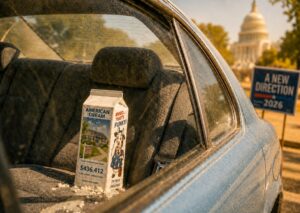
Image created by the author using Photo Realistic Image GPT, © 2026 by National Housing Conference