
Middle-Class Americans Priced Out:
NHC Report Finds Homeownership and Affordable Rent
Out of Reach in Most U.S. Metro Areas
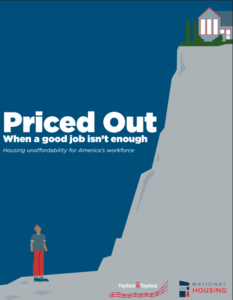
Middle-class Americans are now facing a housing affordability crisis once reserved for low-income families, according to a new NHC report, “Priced Out: When a good job isn’t enough.”
The U.S. housing market is facing a nationwide affordability crisis that now impacts workers across nearly all income levels. Decades of underbuilding, rising interest rates, and wage stagnation have combined to push both homeownership and rental housing further out of reach. This report from NHC uses its Paycheck to Paycheck database to track affordability changes in 390 metropolitan statistical areas (MSAs) from 2019 to 2024, with focused case studies in Asheville, Boise City, Houston, Tampa, and Seattle.
Key Findings
- Homeownership Costs Have Surged: In 2024, 176 MSAs require a six-figure income to buy a typically priced home with 10% down, up from 30 in 2019. In 125 MSAs, the income needed to purchase has at least doubled since 2019.
- Renting Is Increasingly Unaffordable: Nearly half (47%) of tracked occupations cannot afford a two-bedroom apartment, compared to 38% in 2019. In 32 MSAs, the salary needed to comfortably rent exceeds $75,000.
- Wages Lag Far Behind Costs: Even traditionally high-earning professionals are losing housing access. In Seattle, dentists cannot afford to buy a typically priced home; in Asheville, civil engineers are priced out despite earning nearly $100,000.
Housing unaffordability cuts across professions and geographies, eroding stability for workers, employers, and communities. With the median U.S. household income now enough to buy a home in only 128 MSAs (down from 287 in 2019), the American Dream of homeownership is slipping away. Without significant policy action to expand supply and stabilize costs, affordability pressures will continue to deepen, displacing workers and constraining economic opportunity.
Read the report